

How UK Public Servants Are Using AI at Work
Results from a survey of 185 officials show that most government workers are using AI daily for routine tasks, and that broader adoption is held back by lack of trust in accuracy and security.
By Sharif Kazemi, Stephen Clare, Ula Rutkowska and Michael Hallsworth
At a glance
AI could substantially change how government works, yet we know surprisingly little about how public servants are actually using it. We lack data on barriers to adoption, public servants’ views of AI, whether government employees are seeing productivity gains, and more.
To address this evidence gap, GovAI, the Behavioural Insights Team (BIT), and Apolitical partnered to survey 185 UK public servants (including 120 civil servants in central government departments) about their day-to-day use of conversational AI tools, such as ChatGPT or Microsoft Copilot. We also asked about their trust in such systems and whether AI is influencing policy. In this blog post, we present our headline results. A full report is forthcoming.
Our findings should be taken with a grain of salt. Respondents were reached through the organizers’ mailing lists and thus are not a representative sample of UK public servants. For more information about the survey’s methodology, definitions, and limitations, including self-selection bias, please see the methodology section.
Our headline findings are:
- Nearly all respondents (95%) have used AI tools for work in the last month, with most using them at least once per day, despite half only adopting AI for work in the last year.
- More than a quarter (28%) of respondents reported that AI “significantly influences” the substance of their work at least one-third of the time. Most (57%) expect AI to significantly influence their work at least a third of the time by 2027.
- Respondents reported saving about three hours a week by using AI, equivalent to 8% of the work week. Those who used AI more reported higher productivity benefits.
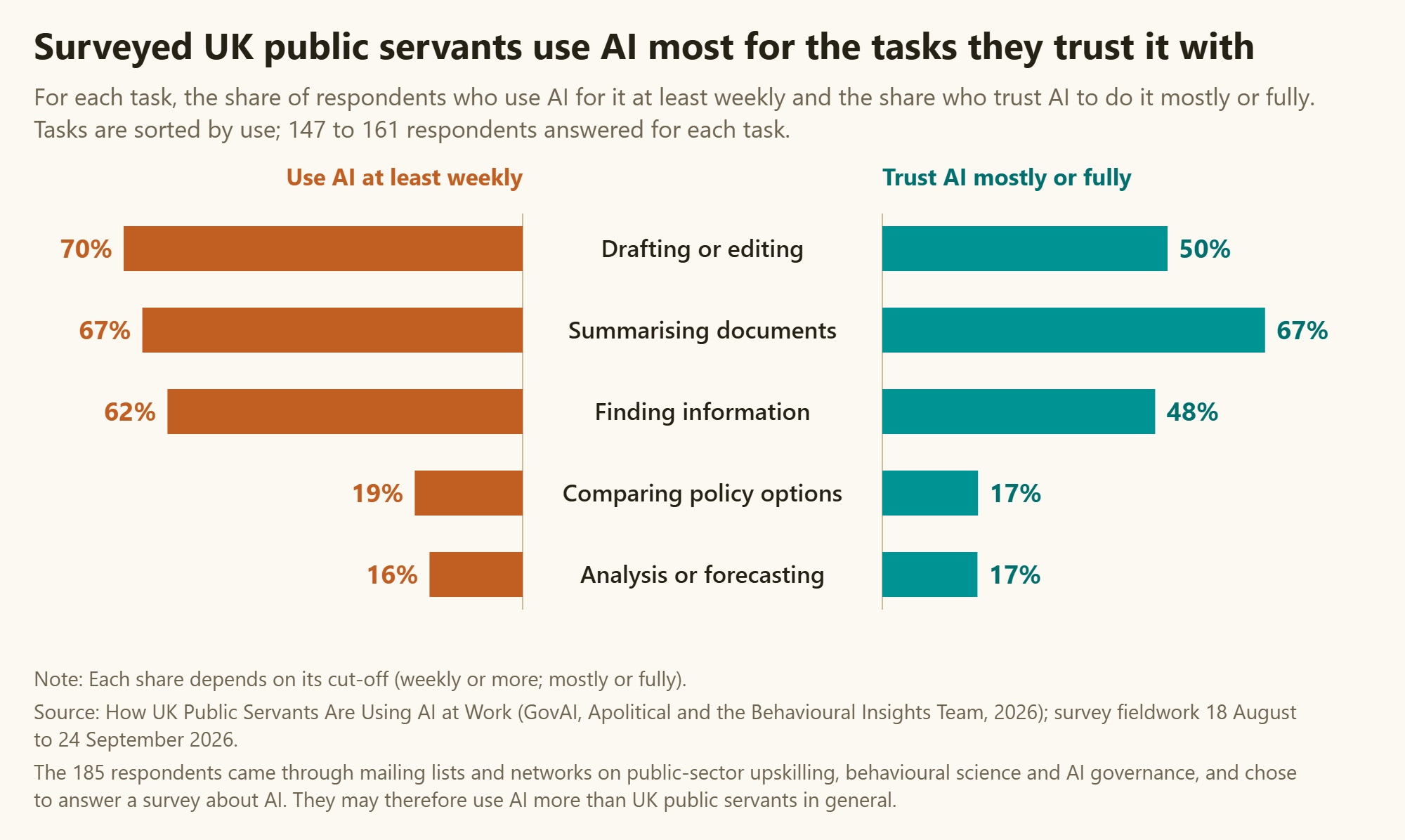
- Most public servants surveyed primarily use AI for simpler tasks, like summarizing information, rather than forecasting impacts or offering direct advice on policy. For these simpler tasks, public servants reported higher levels of trust in AI to perform well.
- Lack of trust in AI was the biggest barrier to adoption. Concerns were highest around the accuracy and data security of AI tools.
Introduction: AI adoption for policy-making
Governments are increasingly adopting AI to improve decision-making and public service delivery. The UK government, for example, has launched an AI Taskforce, whose mandate includes enabling AI adoption across the public sector.
Our survey of 185 UK public servants included questions about how often respondents use AI, what specific tasks they use it for, and what would lead them to use AI more frequently, among other topics. The survey asked public servants to reflect on how their AI use is changing and provide subjective opinions on usage trends.
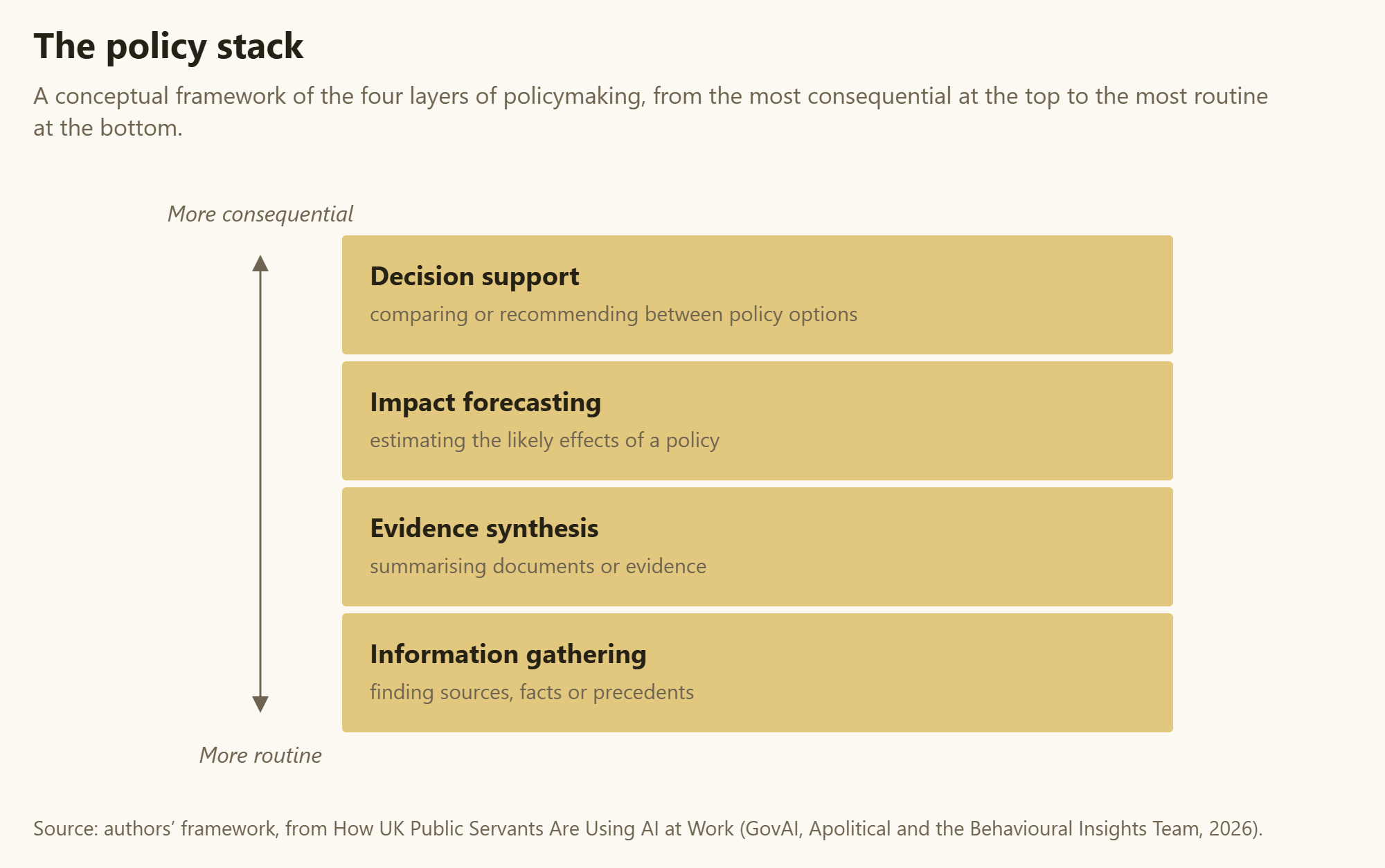
To categorize AI tasks in a consistent way, we divide them into two groups – one that we dub a “policy stack” and a second set of “general tasks”. At the bottom of the policy stack are routine tasks, such as information gathering and evidence synthesis. Tasks that are higher up the policy stack are less routine and more consequential, such as impact forecasting and decision support at the top. General tasks include drafting a document, taking notes in a meeting, and project management.
How do public servants use AI?
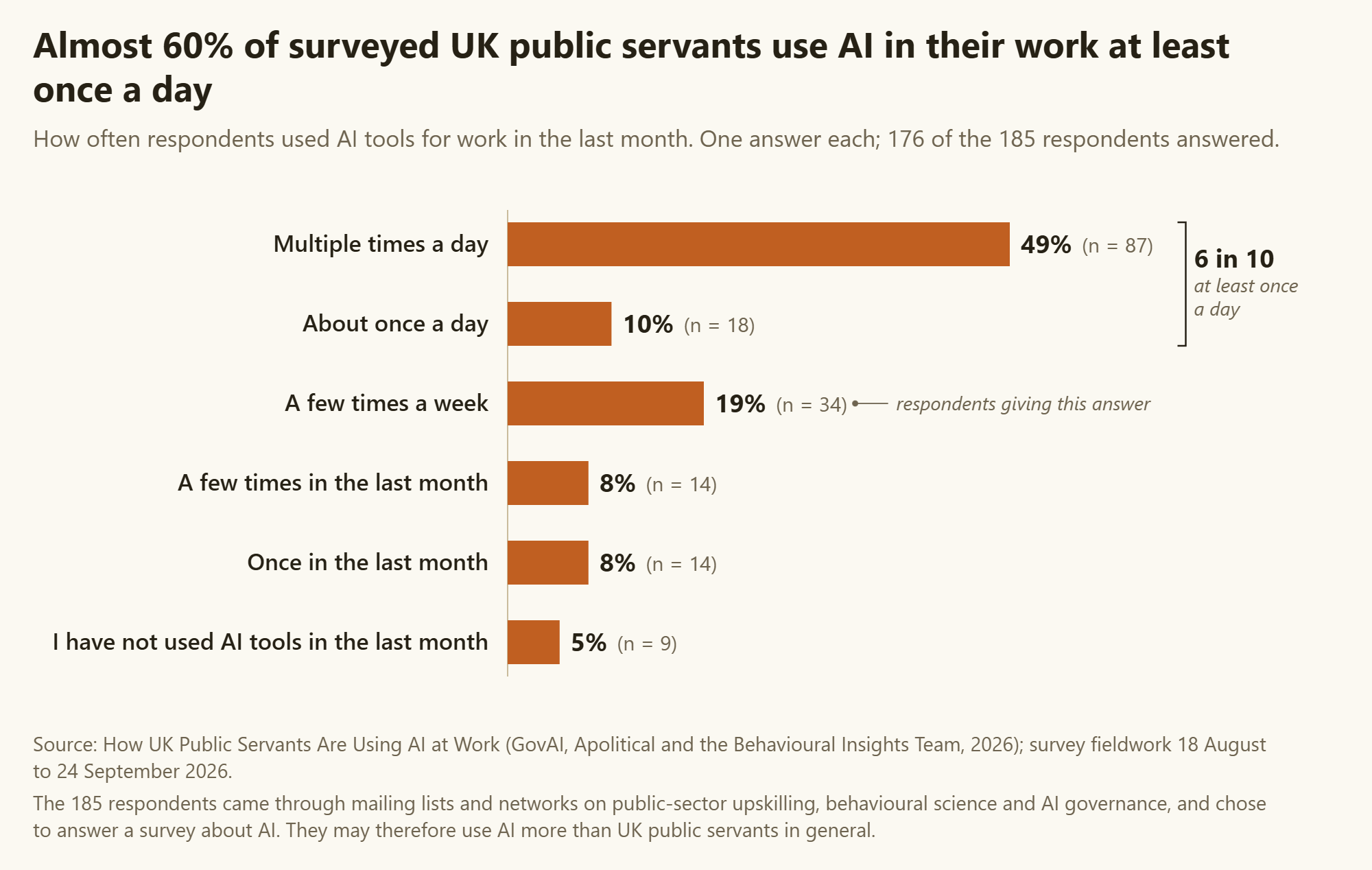
6 in 10 respondents use AI daily, but mainly for tasks at the bottom of the “policy stack”
Our first set of questions focused on how public servants use AI and how this is changing over time.
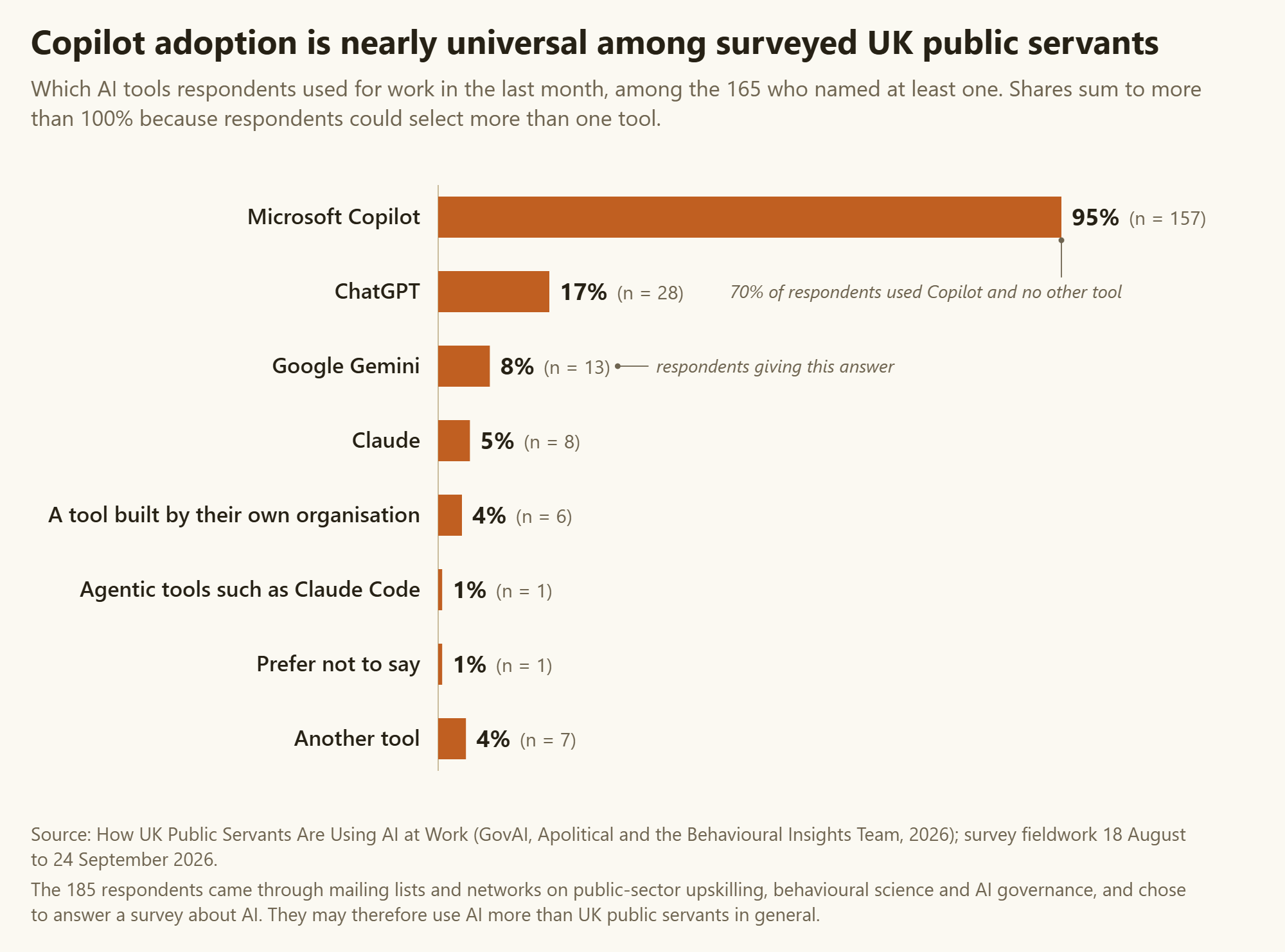
We found that AI use at work is relatively widespread: 60% of respondents reported using AI at least once per day, and 79% reported using it at least a few times a week. Almost all of this use occurs through Microsoft Copilot: 95% of respondents had used Copilot in the last month, and 70% had used no other tool. ChatGPT had been used by 17%; no other service had been used by more than 10% of respondents.
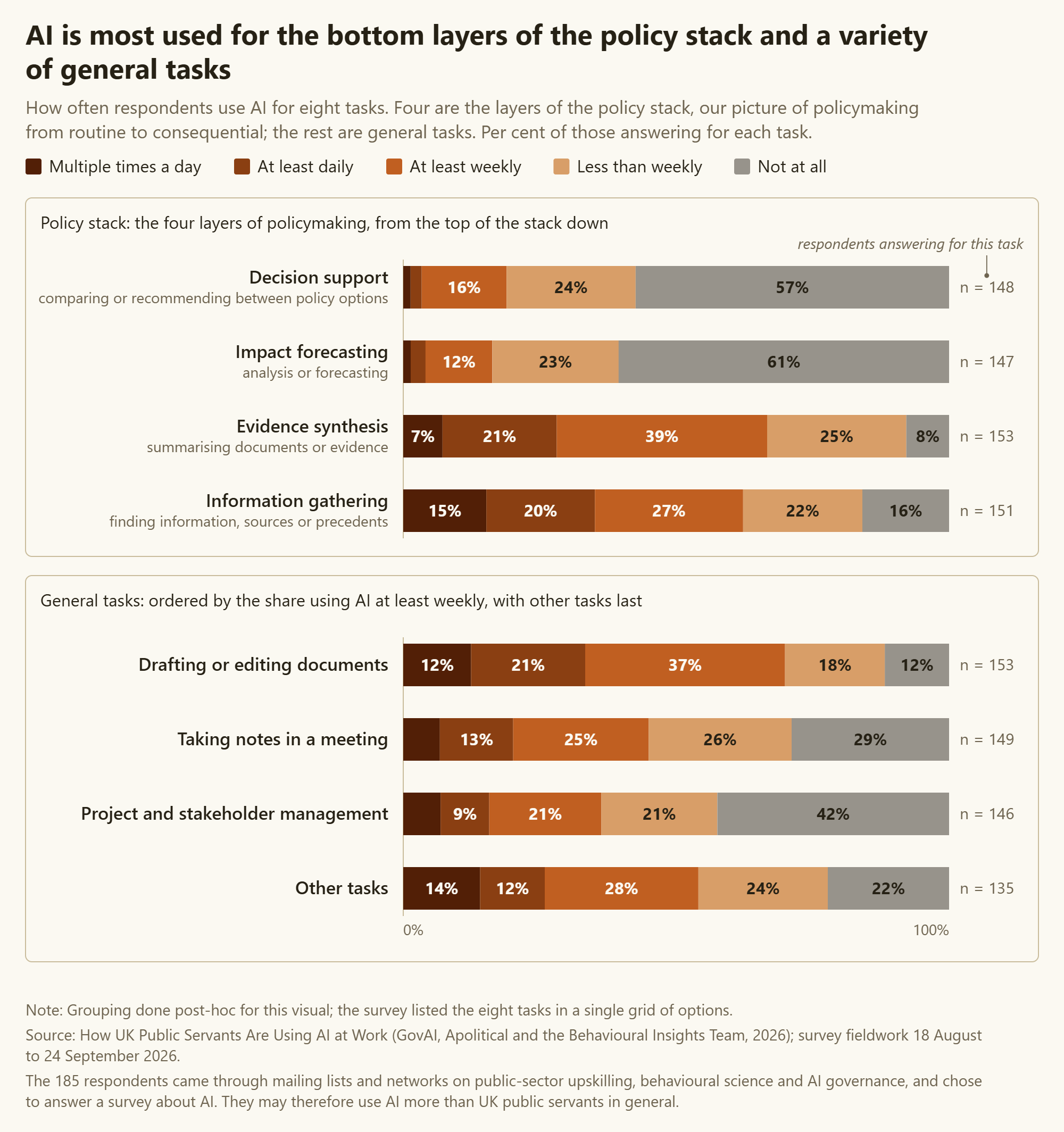
We asked about eight tasks. Four map onto the layers of the policy-making process (information gathering, evidence synthesis, impact forecasting, and decision support); the rest are general tasks, such as editing drafts. We found that AI use is heavily focused on the bottom two layers of the “policy stack” – information gathering and evidence synthesis. Over 60% of respondents use AI at least weekly for these tasks. Less than 20% use it at least weekly for the top two layers of the stack – impact forecasting and decision support.
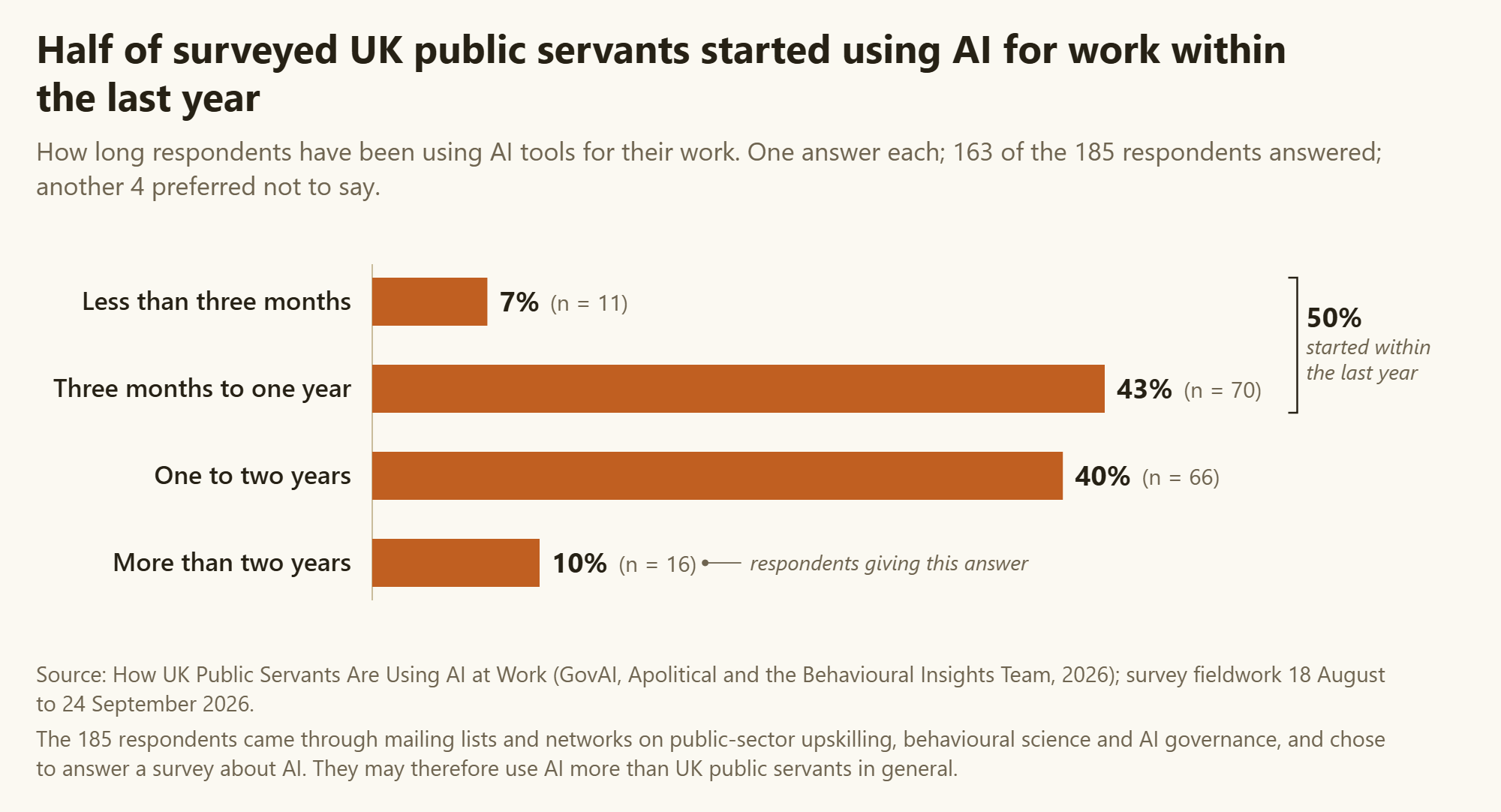
These results reflect early adoption: Half of respondents started using AI for work within the past year, and only 1 in 10 were using AI more than two years ago.
AI already significantly influences public servants’ work
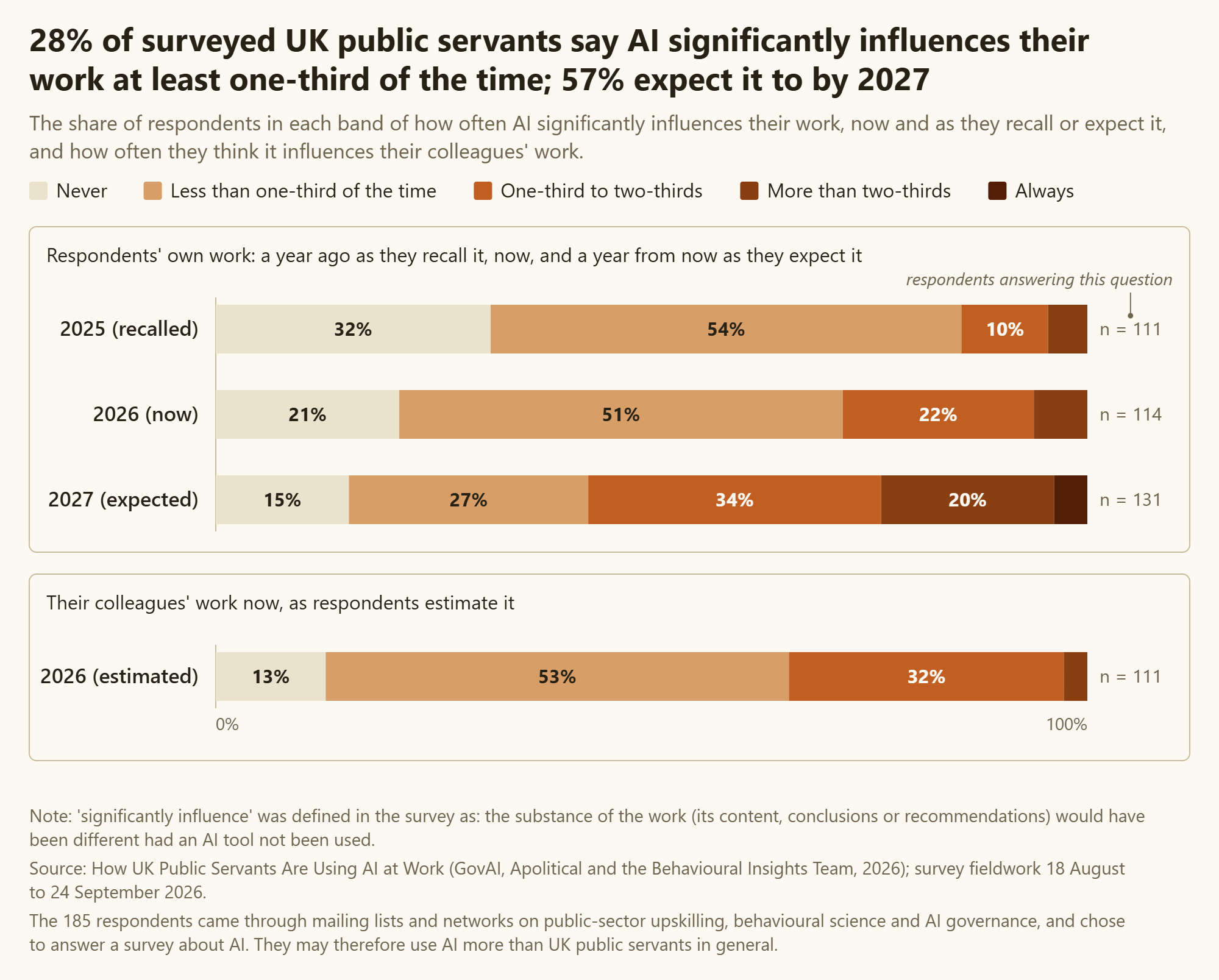
We next asked whether AI use had significantly influenced public servants’ work, which we defined as instances in which “the substance of the work — its content, conclusions, or recommendations — would have been different had an AI tool not been used”.
Nearly half of respondents (45%) could recall a specific instance in the last month when AI significantly influenced an output. One respondent said that AI was used to think of different options and to challenge existing opinions regarding advice that was to be delivered to a minister or senior official. The final output was strengthened by using AI in this way, the respondent reported.
Asked how often AI influenced their work in the last month, more than a quarter of respondents (28%) said that AI significantly influenced their work at least a third of the time. Respondents generally expected AI’s influence on their work to rise over time: 57% predicted that by 2027 AI would significantly influence their work at least a third of the time.
We also asked respondents to estimate how often AI significantly influences their colleagues’ work. The results were broadly similar: 34% of respondents estimated peers’ work to be significantly influenced by AI at least one-third of the time.
Public servants use AI most for tasks they trust it to handle, but doubts about accuracy and security limit adoption
To assess what could drive faster adoption of AI, we asked respondents several questions about when they trust AI to complete a task.
As in a recent Gallup poll of the broader public, adoption among public servants tends to go hand in hand with trust, and respondents tend to use AI more for tasks that they trust it to accomplish.
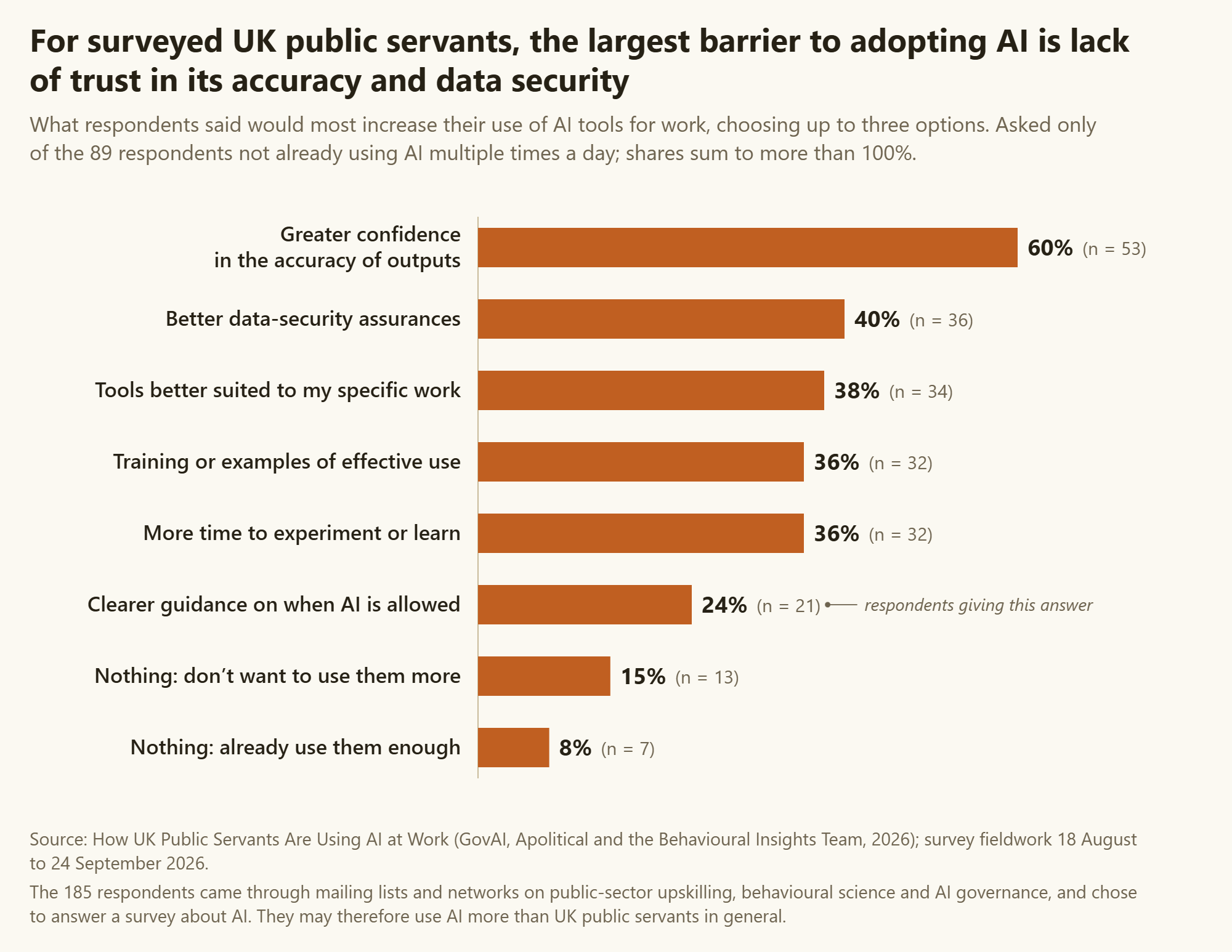
We asked the 89 respondents who do not already use AI multiple times a day what would most increase their use. Asked to select up to three factors, 60% chose greater confidence in the accuracy of outputs and 40% better data-security assurances. Next came tools better suited to their work (38%), training or examples of effective use (36%), and more time to experiment and learn (36%). Clearer guidance on when AI is allowed came last (24%), and 15% said they do not want to use AI more.
Respondents remain wary of relying completely on AI-generated outputs: 85% report checking AI outputs before sharing them “always” or “most of the time”; only 4% “never” check AI’s work before sharing.
Respondents broadly find AI useful, and the more often they use it, the more they report it saves them time
Despite these trust issues, most respondents (79%) reported that AI saves them time. In the previous week, 20% estimated it saved them five hours or more, 48% between one and four hours, and 10% under an hour; 21% reported no savings, including 2% who said AI cost them time. On average, respondents reported saving about three hours a week, which is roughly 8% of a 37-hour work week. Our results are in the same range as the government’s own Copilot trial in late 2024, which found about 2.2 hours saved per week (an average of 26 minutes a day).
Among our respondents, those using AI daily reported saving 4.0 hours a week on average, against 2.3 for those using it a few times a week and 0.5 for those who use it less often – a gap of almost three and a half hours between the heaviest and lightest users. These averages are reported after controlling for grade, function, and years of experience.
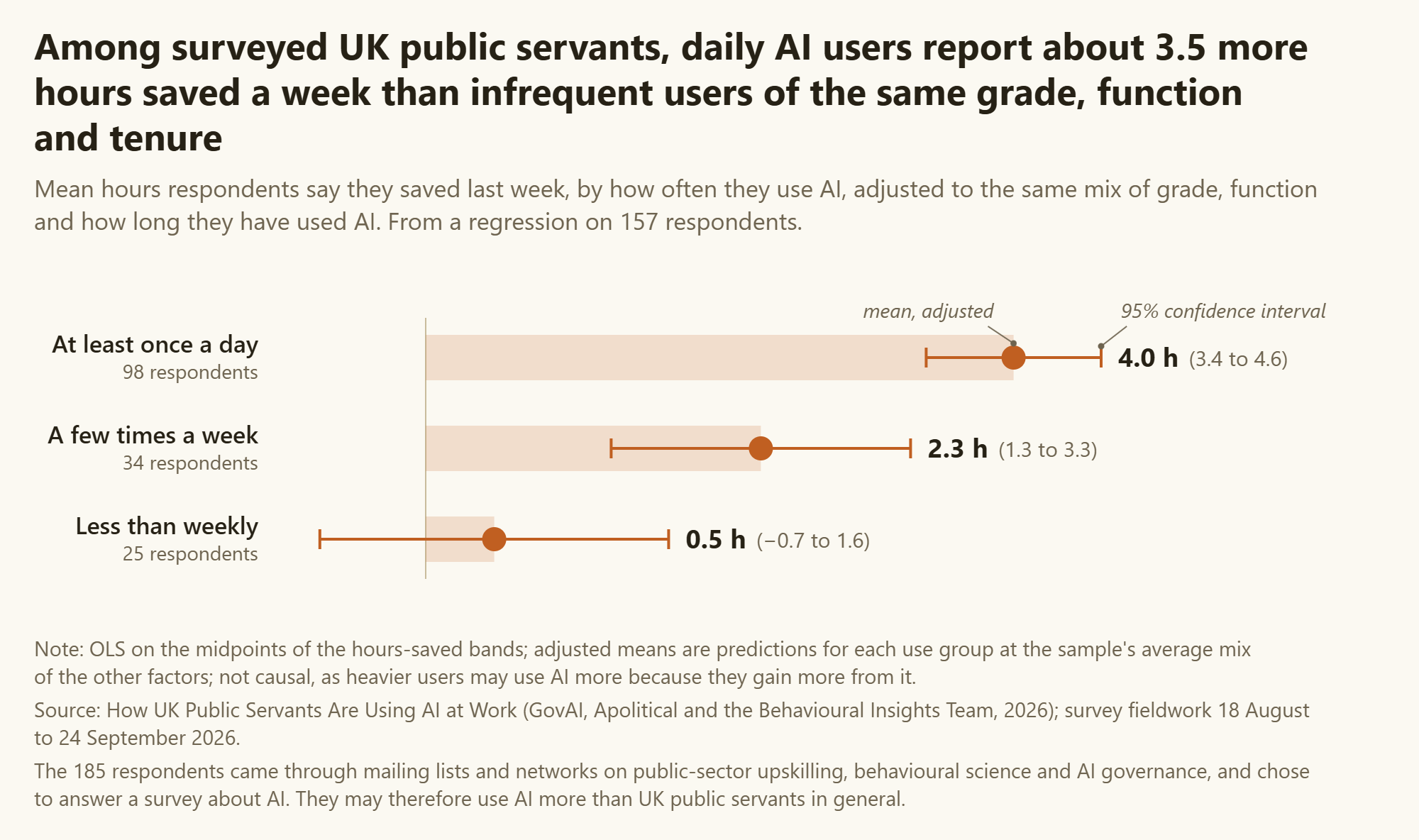
However, it cannot be inferred from these figures that greater AI usage leads to greater productivity in all cases. Those who use AI more may be in roles that are particularly suited to delivering AI-related productivity gains. Moreover, self-reported productivity gains may be mistaken, as was the case in a 2025 METR study.
What do these results mean for AI in policy-making?
Overall, our results suggest that AI tools are becoming an important part of UK public servants’ work. The vast majority of our respondents report using AI tools, and even though half of respondents only started using AI in the last year, 6 out of 10 use it at least once per day. They also report being thoughtful adopters, using AI for tasks where they trust its outputs, and the vast majority usually or always check AI outputs before sharing them.
Our results suggest that improving the accuracy of AI outputs, and users’ perceptions of their reliability, would provide the biggest boost to adoption, though significant minorities of respondents also say they would use AI more if they had stronger security guarantees or more training. Respondents expect usage to continue to rise as AI systems become more capable and accurate.
Governments are already facing pressing questions about how to support efficient, secure, and transparent use of AI in government. This survey is a first attempt to provide concrete data on how public servants use AI in their daily work.
Understanding how AI is used in policy-making and public services will take sustained, comparable measurement and repeated surveys and experiments to establish what safe and effective adoption looks like in practice.
Methodology and limitations
The survey was shared via the mailing lists of Apolitical and BIT, as well as the professional networks at GovAI. It ran from August 18 to September 24, 2026; 82% of respondents came through Apolitical (151), 14% through BIT (26), and 4% through GovAI (8).
We defined “AI tools” as “software products, built using large language models, that generate answers to user prompts. Such tools may be accessed through a web browser or dedicated app, and include products such as ChatGPT, Claude, Gemini, Microsoft Copilot, and other AI assistants. This survey covers both organization-provided tools and tools you access independently. Features that run automatically in the background, such as spellcheck or automatic meeting summaries, do not count.”
The survey included 42 questions, covering four main categories:
- Usage patterns: Which tools, how often, for what tasks, and how usage is changing.
- Substantive influence of AI on work outputs: Both a deep dive on a recent case and general trends for themselves and their colleagues.
- Trust: What holds public servants back from using AI more in their work.
- Productivity: How many hours of work AI saved public servants last week (if any).
Nine of the 42 questions were shown only when an earlier answer made them relevant, and four were open-text. The questions about a recent case of decision influence, for example, went only to the 75 respondents who could recall one.
The questionnaire was revised on August 25, after the first 31 responses, to simplify wording on substantive influence questions and add answer options on two questions; results from both versions are pooled with a note on questions that were modified between the two versions.
In total, 201 people submitted the survey. We excluded 16 who said they were not UK public servants or officials, leaving 185. Of these, 171 (92%) reached the final section; each result is a share of those who answered that question. We cannot give a response rate, because the survey went out through open mailing lists and networks and we do not know how many people saw the invitation.
Summary statistics on participants:
- Position (n = 179): 34% HEO or SEO, 33% Grade 6 or 7, 22% EO or below, 3% Senior Civil Service, 8% other (including five local elected office holders).
- Function (n = 181): 28% operational delivery, 25% policy, 22% delivery and project management, 9% research, 15% other.
- Organization (n = 167): 72% UK central government department or agency (civil servants), 21% devolved or local government, and 7% other.
- Experience (n = 171): 49% have 20 or more years of work experience, 20% have 10 to 19 years, 31% fewer than 10.
- Age (n = 167): 67% are 45 or over, 17% are under 35, none are under 25.
- 41% manage other people (n = 181); 41% work on AI or digital technology as a subject, fully or in part (n = 169).
Note that our sample is likely biased in ways that make it hard to generalize to the civil service as a whole:
- Public servants filling out this survey are self-selecting to give opinions on AI, particularly for policy work, which was a stated objective in outreach messages. Since they were contacted via the mailing lists of the implementing organizations, they are also likely more interested than average in AI. Answers about AI use and productivity impacts are also self-reported rather than observed directly, and therefore should be taken as indicative rather than definitive.
- Compared with the civil service as a whole, our respondents are more senior, older, and more policy-focused: 33% are Grade 6 or 7 (17% of all civil servants), 25% work in policy (7%), and 28% in operational delivery (55%). Only a third are under 45, whereas 41% of civil servants are under 40.
About the authors
Sharif Kazemi is a former seasonal fellow at GovAI, where he researched the adoption and security of AI advice in policy-making.
Stephen Clare is an associate program officer at Coefficient Giving and the former lead writer on the International AI Safety Report. He contributed to this project as a supervisor during the GovAI seasonal fellowship.
Ula Rutkowska is the head of research at Apolitical, the learning platform for public servants.
Michael Hallsworth is the chief behavioural scientist at the Behavioural Insights Team (BIT) and a former senior policy adviser in the UK Cabinet Office.
Acknowledgments
The authors are grateful to colleagues and collaborators who provided helpful comments on the design of this survey and the write-up of its findings. In particular, we express thanks to Noemi Dreksler, Markus Anderljung, Elias Groll, Charlie Giattino, John Lidiard, Daniel Pryor, Jasmin Baier, Joseph Levine, Lowell Weisbord, Keerthana Bathula, Mike Slaven, Marina Nenadic, and Sebastian Salomon-Ballada.